

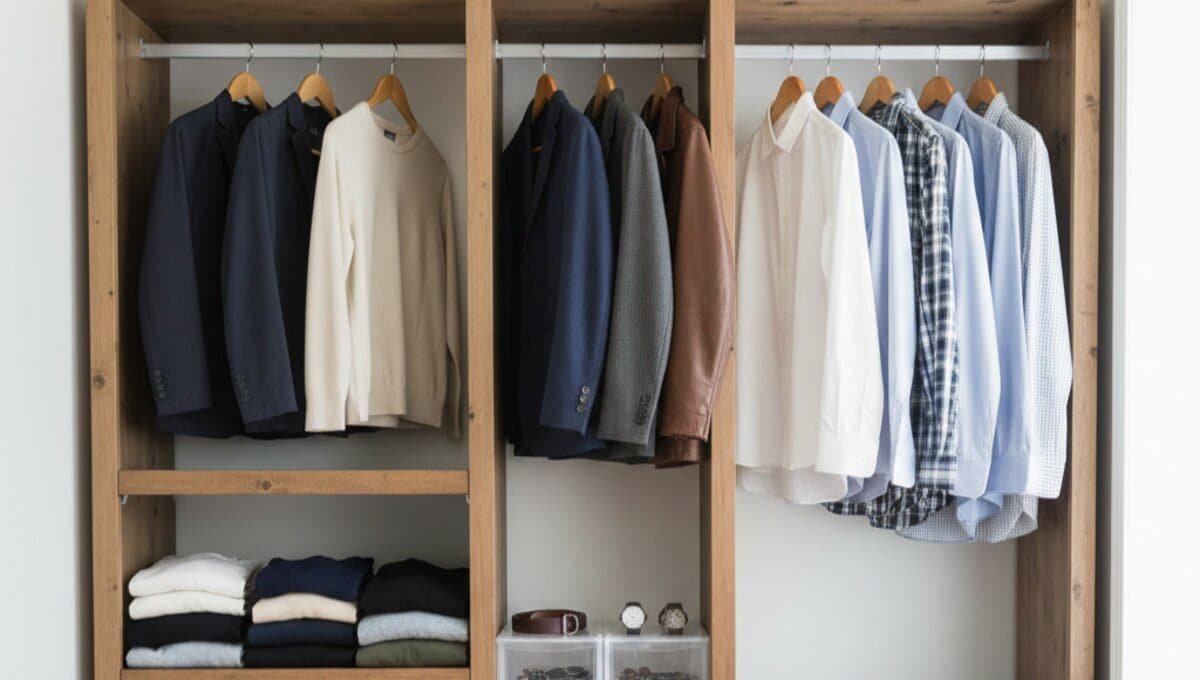
You’ve likely experienced that specific type of morning frustration where you’re staring at a closet bursting with clothes, yet you feel like you have absolutely nothing to wear. It’s a strange, modern paradox. We buy more, spend more, and accumulate more, yet our style feels more diluted than ever. This is exactly where the men’s capsule wardrobe comes in. It isn’t just a minimalist trend or a way to save space in a cramped apartment; it’s about taking back your time and actually liking what you see in the mirror.
When you strip away the noise of fast-fashion trends that die within six months, you’re left with the essentials. Imagine a wardrobe where every single item—from your socks to your overcoat—is something you actually enjoy wearing. No filler shirts. No “maybe I’ll fit into these one day” jeans. Just a solid, reliable collection of clothes that actually work together without you having to try too hard.
But let’s be clear: this isn’t about owning only three shirts and a pair of trousers. It’s about intentionality. It’s the realization that a good navy blazer and a crisp white Oxford can carry you from a morning meeting to a dinner date without a second thought.
Key Takeaways
- A men’s capsule wardrobe is a strategic system of 30 to 40 versatile, high-quality pieces designed to eliminate decision fatigue and ensure you’re dressed for any occasion.
- The foundation relies on a “neutral-first” color palette and a “buy once, repair later” mindset that prioritizes natural fibers like merino wool, heavyweight cotton, and selvedge denim over fast-fashion synthetics.
- Building a successful collection requires a ruthless initial closet audit followed by a modular approach to seasonal layering, allowing a single core set of clothes to function year-round.
What Most Style Guides Get Wrong
If you’ve spent any time looking this up, you’ve probably seen the same generic lists: “Buy a suit, buy a tee, buy a pair of jeans.” But that advice often ignores the reality of how we live. Most guys don’t just want a shopping list; they want a system that makes sense.
Standard guides usually focus on the “what”—the items themselves—but they skip the “how.” How do you transition a summer capsule into a winter one without buying a whole new wardrobe? Why does a specific fabric weight matter more than the brand name on the tag? Plus, a lot of style blogs are still pushing the “skinny everything” look from 2015, even though we’ve clearly moved into an era of more relaxed silhouettes.
To really make this work, you have to look at your wardrobe as a modular kit. It’s less like a collection of individual trophies and more like a deck of cards where every card can be played with any other.
The First Step: The Great Purge
You can’t build a house on a shaky foundation, and you can’t build a capsule wardrobe in a cluttered closet. You have to be ruthless. I’m talking about pulling every single thing out of the dark corners of your closet and laying it all out on the bed where you can’t ignore it.
Ask yourself a few honest questions. Does this fit me right now? Have I worn this in the last twelve months? Does it make me feel confident, or am I just wearing it because it was expensive?
- The Keep Pile: High-quality basics, items that fit perfectly, and pieces in neutral colors (navy, gray, black, olive).
- The Tailor Pile: That one suit that’s a bit too long in the arms or the trousers that need a slight hem. If it’s worth saving, save it.
- The Donation Pile: Anything stained, stretched out, or that screams “I bought this because it was on sale.”
By the time you’re done, your closet should feel empty. That’s okay. That emptiness is actually clarity.
The Core 30: A Blueprint for Versatility
While the exact number doesn’t matter as much as the utility, most men find that around 30 to 35 items (excluding gym wear and underwear) covers every base. Here is how you should break it down.
The Upper Body: The Engine Room
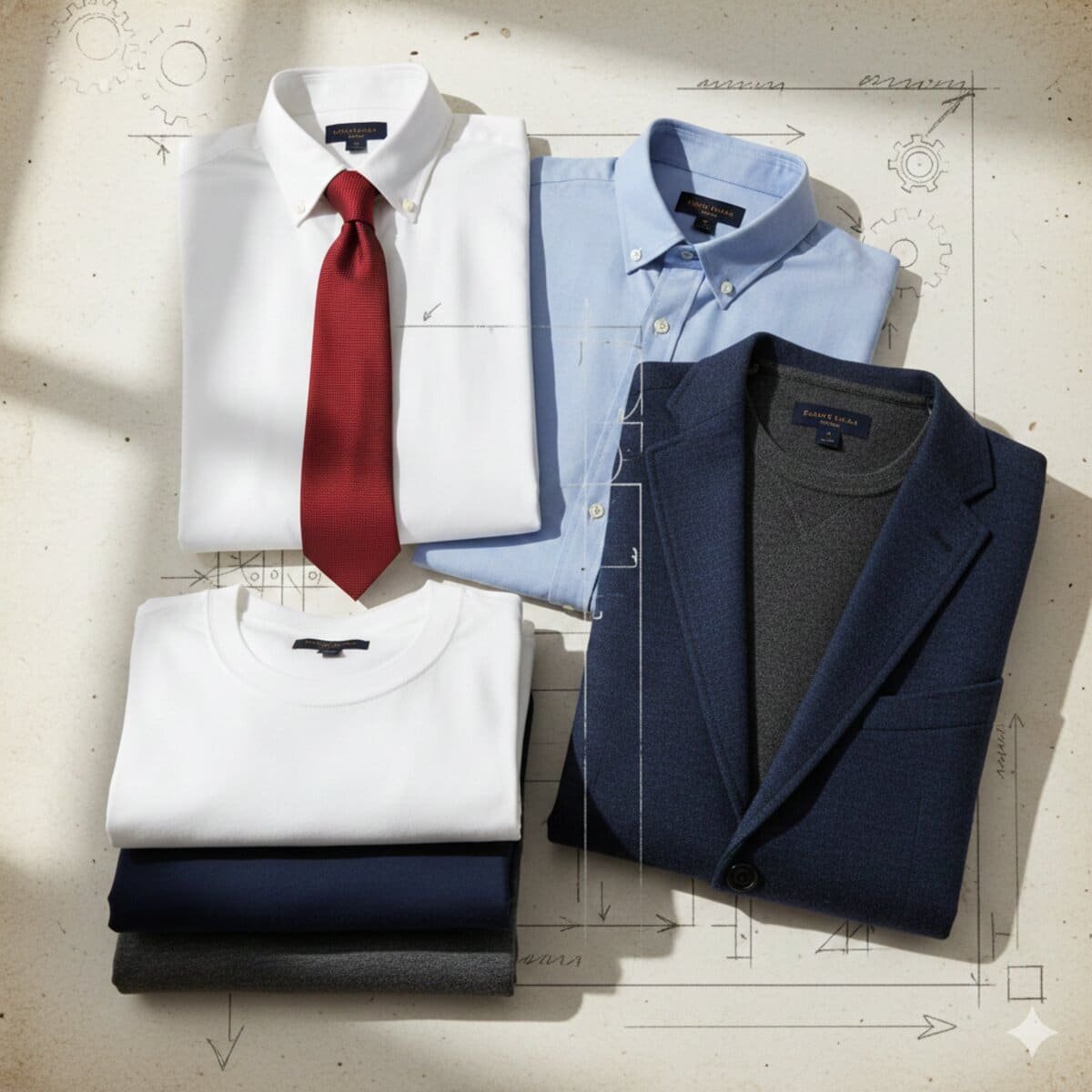
Your shirts and sweaters do the heavy lifting. They are the first thing people notice.
- The White and Light Blue OCBD (Oxford Cloth Button Down): These are the kings of versatility. Wear them with a tie for a wedding, or unbuttoned over a white tee for a weekend coffee run.
- The Heavyweight Tee: Forget those thin, translucent undershirts. You want 100% cotton with a thick collar that won’t roll. Get them in white, navy, and charcoal.
- The Merino Crewneck: Merino wool is a miracle fabric. It’s breathable, odor-resistant, and thin enough to layer under a jacket without feeling like you can’t move your arms.
- The Navy Blazer: If you’re going to own one “dressy” item, make it a soft-shouldered navy blazer. It bridges the gap between casual and formal perfectly.
The Lower Body: The Anchors
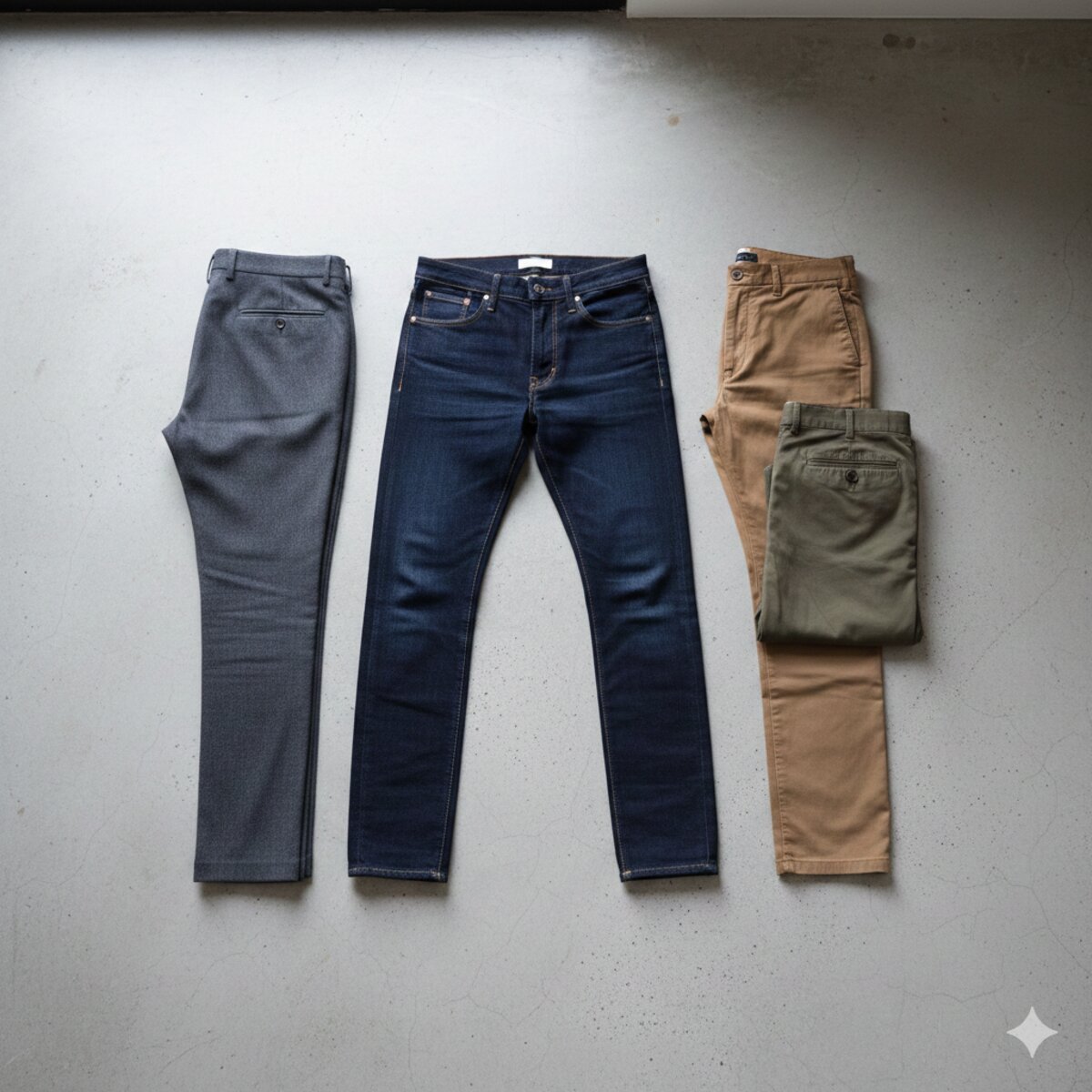
- Dark Indigo Denim: No holes, no gimmicks. A straight or slim-tapered pair of dark jeans can pass as “smart” in almost any environment.
- Chinos in Tan and Olive: These provide a visual break from denim. Olive, in particular, is an underrated neutral that pairs beautifully with blues, grays, and whites.
- Tailored Trousers: Even if you don’t work in an office, one pair of charcoal wool trousers is a must for those events where jeans just won’t cut it.
Footwear: Quality Over Quantity
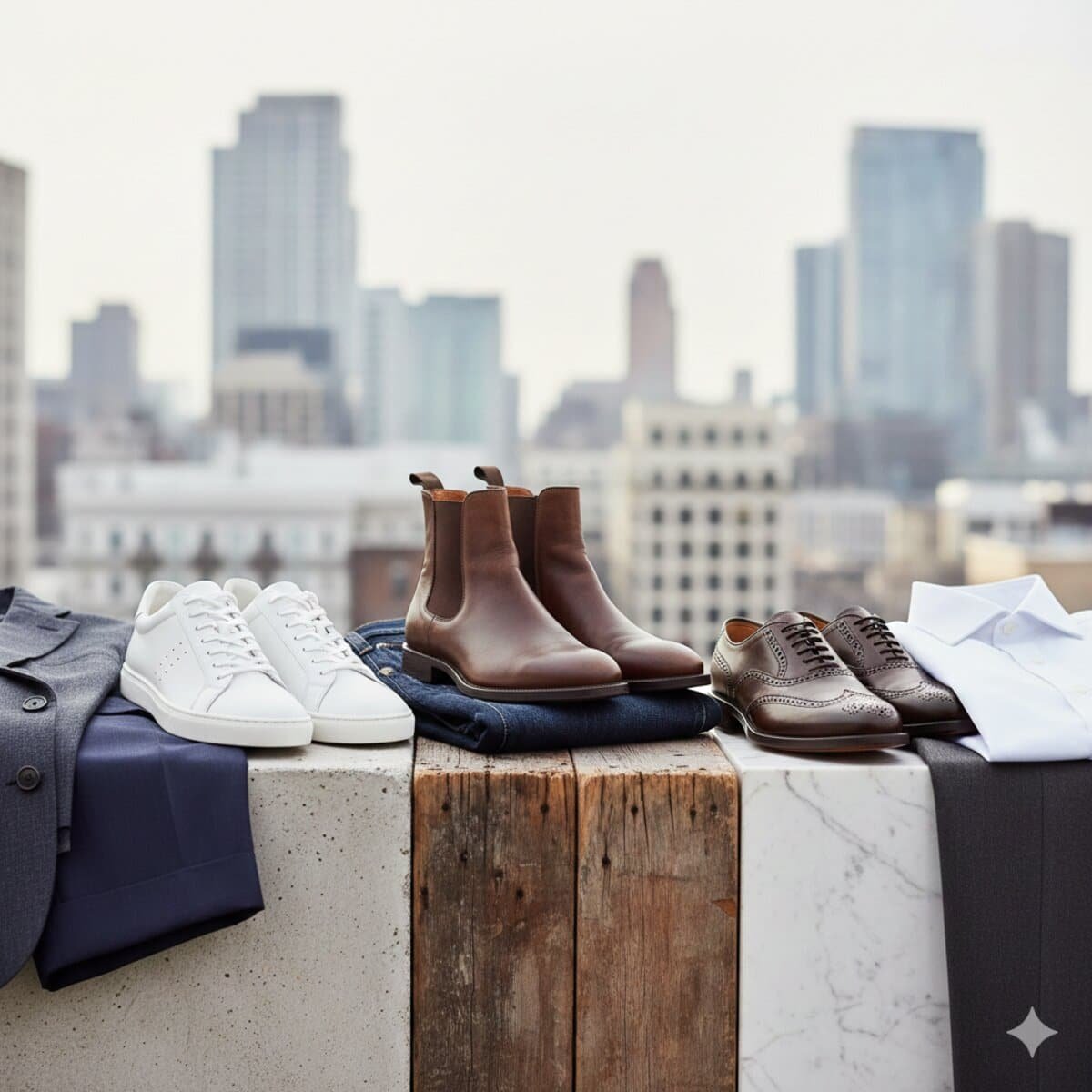
You really only need three or four pairs of shoes to conquer the world.
- White Leather Sneakers: Keep them clean. They work with suits, they work with shorts, they work with everything.
- Brown Leather Boots: Think Chelsea or Service boots. They add a bit of ruggedness and age beautifully.
- Dark Brown Loafers or Derbies: For when you need to step things up.
Of course, a solid pair of boots is usually paired with a reliable everyday carry. If you’ve invested in a quality hide, you’ll want to keep your leather bag in top shape so it develops a proper patina rather than just wearing out.
The “Secret Sauce”: Why Fabric and Fit Rule
You can follow every “must-have” list on the internet, but if the fit is off, you’ll still look like you’re wearing a costume. In 2026, the trend has moved toward a more relaxed, “classic” fit. We’re seeing higher rises on trousers and a bit more room in the chest, which honestly just feels more human and comfortable.
Also, pay attention to the tags. If a shirt is 40% polyester, it’s going to make you sweat and it’s going to pill after five washes. Stick to natural fibers—cotton, wool, linen, and silk. They breathe, they drape better, and they last longer. Spending $100 on a wool sweater that lasts five years is a much better deal than buying a $30 acrylic one that looks like a rag after three washes.
Seasonal Shifts: The Modular Mindset
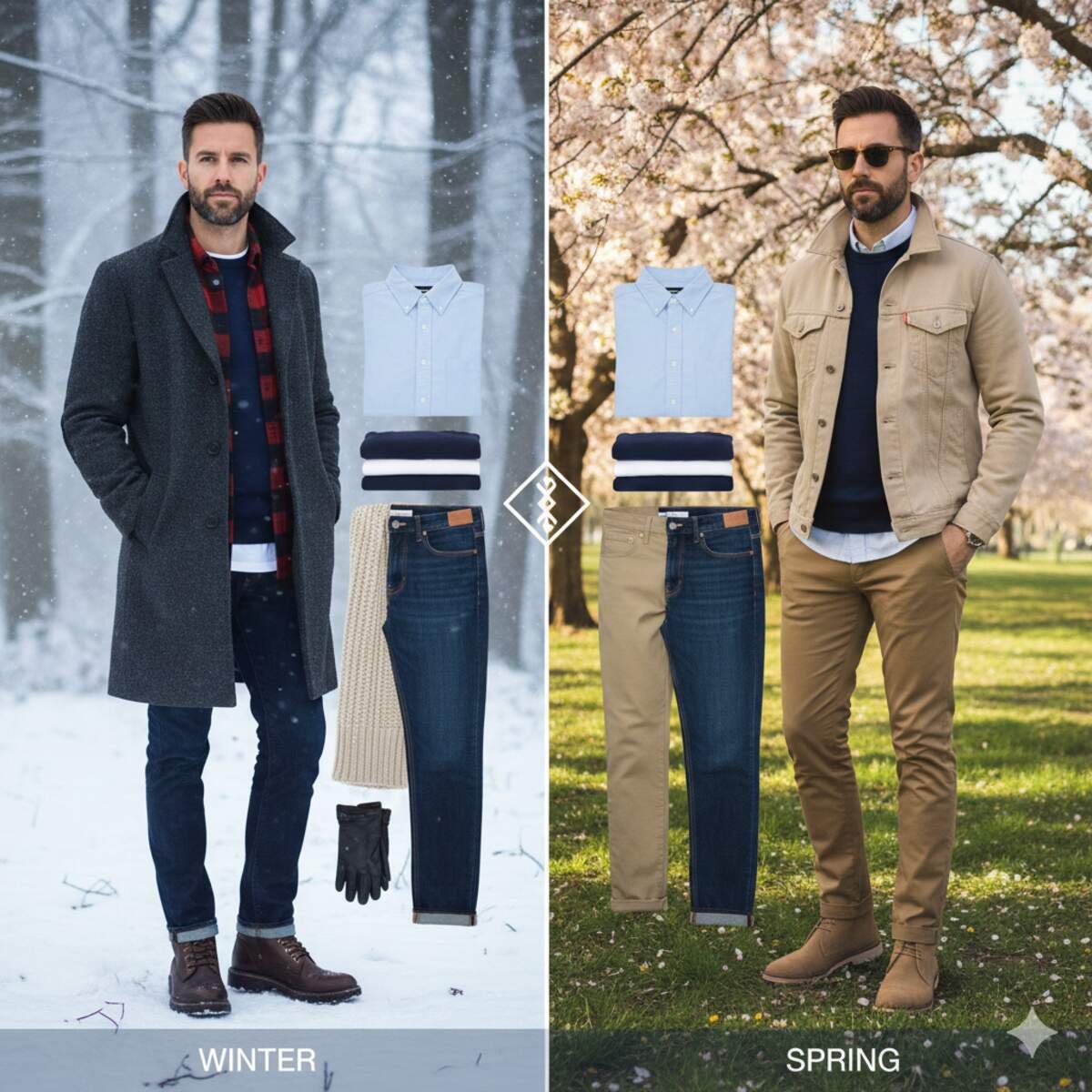
One of the biggest concerns guys have is: “How do I deal with winter?” You don’t need a whole new men’s capsule wardrobe. You just need a few “plug-in” pieces.
In the colder months, your core items stay. Your white tee becomes a base layer. Your navy crewneck goes over your OCBD. You then “plug in” your heavy hitters: a wool overcoat, a flannel shirt, and maybe a pair of heavier boots. When spring hits, you swap the overcoat for a lightweight Harrington jacket or a denim trucker. The foundation—the jeans, the chinos, the tees—never changes.
Frequently Asked Questions
Does a capsule wardrobe mean I can’t have “fun” clothes?
Not at all. Think of the capsule as your 80%. It’s the stuff you wear most of the time. If you have a vintage leather jacket or a bright Hawaiian shirt you love, keep it! But those are the outliers. The capsule ensures you always have a solid base to build those “fun” pieces around.
How do I handle laundry with fewer clothes?
It’s a common worry, but you might actually find yourself doing laundry less often. Why? Because high-quality fabrics like wool and heavy cotton don’t need to be washed after every single wear. Wool is naturally antimicrobial. Unless you spilled something on it, a good airing out is often all a sweater needs.
What is the “333 Challenge”?
It’s a popular way to test the waters. You pick 3 tops, 3 bottoms, and 3 pairs of shoes and try to live out of them for a week (or a month). It’s a great exercise to see just how many combinations you can actually create with a very limited selection.
Is black better than navy for a capsule?
It depends on your skin tone and existing style. Navy is generally considered more versatile because it pairs better with brown leathers and a wider range of colors. However, if you prefer a sharper, more “urban” look, a black-based capsule can be incredibly striking. Just try to pick one “base” dark color and stick with it.
Your Path to a Simpler Morning
The transition to a capsule wardrobe isn’t just about fashion; it’s about mental clarity. When you remove the clutter from your physical space, you remove it from your mind. You start to value quality. You start to understand your own proportions better. And honestly? You just look better.
Don’t feel like you have to go out and buy “The Perfect 30” today. Start by cleaning out the junk. Then, as things wear out, replace them with the best version you can afford. It’s a slow burn, but the result is a wardrobe that serves you, rather than the other way around.
What’s the biggest hurdle stopping you from thinning out your closet? Is it the cost of quality pieces or just the fear of getting rid of something you “might” need? Let’s talk about it in the comments below! And if you’re looking for more ways to streamline your life, make sure to follow us on Facebook and Instagram for daily updates.
Sources
- www.fashionbeans.com/article/mens-capsule-wardrobe-guide/
- www.gq.com/story/how-to-build-a-capsule-wardrobe
- www.primermagazine.com/2021/learn/the-capsule-wardrobe-how-to-get-more-out-of-less
- www.themodestman.com/capsule-wardrobe/
All images are AI generated